Showing posts with label Adolescents. Show all posts

Dec 19, 2017

BBC: Young Adult Court featured on BBC's "Neurolaw and Order" podcast


"This is a courtroom here in downtown San Francisco. A judge presides over a room bustling with young offenders, attorneys, probation officers, and case managers. But this is no ordinary courtroom. This one has been inspired by recent advancements in neuroscience."
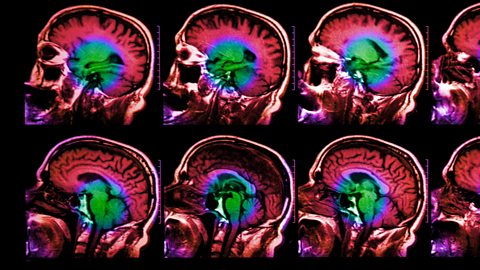


The San Francisco Young Adult Court was featured on the BBC World Service series "The Documentary." In "Neurolaw and Order," Owen Jones, professor of law and biology at Vanderbilt University, explores how brain development heightens risk taking among adolescents and young adults, sometimes leading to criminal activity, as well as ways the criminal justice system is adapting to advancements in neuroscience by offering alternatives to young people facing criminal charges.


Podcast description (BBC): "The latest findings in neuroscience are increasingly affecting the justice system in America. Owen Jones, professor of law and biology at Vanderbilt University, explores where neurolaw is making its mark and where the discipline is heading. One significant finding from MRI scanners is that the adolescent brain continues to develop right into the early- and mid-twenties. The fact that we are not ‘adults’ at age 18 is having big repercussions in the legal system. In San Francisco, the entire way that young offenders of crimes such as armed robbery up to the age of 25 are treated is adapting to the brain data. More and more, neuroscientists are testifying in courts, often to mitigate sentences including the death penalty in juveniles. Other times, they highlight rare brain abnormalities that cause violent and antisocial behaviour, which helps justify a lighter sentence. However, young brains are still malleable. In Wisconsin, brain imaging of juvenile prisoners can detect psychopathic markers. Once identified, staff can employ techniques to de-programme those antisocial traits and rehabilitate prisoners to ready them for, they hope, a crime-free life outside. And this is simply the first generation of neurolaw – where to next?

Click here to listen to "Neurolaw and Order."

May 26, 2017

Collaborative Courts Speakers Series: Adolescents, Young Adults, and the Brain

San Francisco Collaborative Courts offers a quarterly speaker series to provide relevant training opportunities to partners across justice, substance use, mental health, and family service systems. Participation is free of charge.

Upcoming training opportunity: 

Adolescents, Young Adults, and the Brain
Friday, June 9, 2:30-4:30pm
Judicial Council of California
455 Golden Gate Avenue, San Francisco, CA
Milton Marks Auditorium, lower level

Overview

Working with adolescents and young adults requires an understanding of the developmental processes affecting behavior, decision making, capacity and motivation. This training provides an overview of the typical and trauma-reactive developmental changes in adolescence and young adulthood. Training content provides a brief overview of neuroscience, substance use, developmental differentiation, mental health issues and trauma. Participants will learn key strategies for positive engagement with youth and young adults. 

Speaker

Dr. Gena Castro Rodriguez, Psy.D., holds a BA in psychology from Sacramento State University, a Masters in Counseling Psychology from University of San Francisco, and Doctorate in Clinical Psychology from California Institute for Integral Studies. She has worked in the dependency, delinquency and criminal justice systems for 25 years, including 10 years as the co-founder and executive director of the Youth Justice Institute. She is currently the Chief of the Victim Services Division and Parallel Justice Programs for San Francisco District Attorney’s Office overseeing victim advocacy, restitution, State Victims Compensation Program and the Sentencing Planning Program. Her clinical and research interests are in the areas of trauma, delinquency, cultural humility, victimology and gender responsivity.


The training is free and CEU credits (MCLE and BBS) will be provided. RSVP is not required. Room is available based on seating capacity. Feel free to forward this information.