Showing posts with label Press. Show all posts

Jan 14, 2019

Family Treatment Court partner in the news!

Martha Ryan, founder and executive director of the Homeless Prenatal Program, "is one of six finalists for Visionary of the Year, an annual recognition by The Chronicle of Bay Area leaders whose work improves the world." Her story is highlighted in an article published on SFGATE today. 

Photo: Photos By Peter DaSilva / Special To The Chronicle
The San Francisco Family Treatment Court (FTC) has the great fortune to partner with Martha Ryan and the Homeless Prenatal Program to support families impacted by parental substance use disorders navigating the juvenile dependency system. FTC was implemented in 2007, and the Homeless Prenatal Program has been one of its primary partner agencies from the beginning. 

We look forward to the next 12 years of strengthening families together!

Click here to read the article. 

Dec 19, 2017

BBC: Young Adult Court featured on BBC's "Neurolaw and Order" podcast


"This is a courtroom here in downtown San Francisco. A judge presides over a room bustling with young offenders, attorneys, probation officers, and case managers. But this is no ordinary courtroom. This one has been inspired by recent advancements in neuroscience."


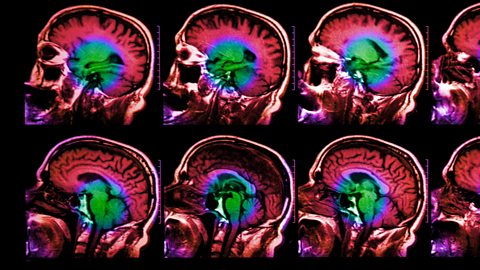
The San Francisco Young Adult Court was featured on the BBC World Service series "The Documentary." In "Neurolaw and Order," Owen Jones, professor of law and biology at Vanderbilt University, explores how brain development heightens risk taking among adolescents and young adults, sometimes leading to criminal activity, as well as ways the criminal justice system is adapting to advancements in neuroscience by offering alternatives to young people facing criminal charges.


Podcast description (BBC): "The latest findings in neuroscience are increasingly affecting the justice system in America. Owen Jones, professor of law and biology at Vanderbilt University, explores where neurolaw is making its mark and where the discipline is heading. One significant finding from MRI scanners is that the adolescent brain continues to develop right into the early- and mid-twenties. The fact that we are not ‘adults’ at age 18 is having big repercussions in the legal system. In San Francisco, the entire way that young offenders of crimes such as armed robbery up to the age of 25 are treated is adapting to the brain data. More and more, neuroscientists are testifying in courts, often to mitigate sentences including the death penalty in juveniles. Other times, they highlight rare brain abnormalities that cause violent and antisocial behaviour, which helps justify a lighter sentence. However, young brains are still malleable. In Wisconsin, brain imaging of juvenile prisoners can detect psychopathic markers. Once identified, staff can employ techniques to de-programme those antisocial traits and rehabilitate prisoners to ready them for, they hope, a crime-free life outside. And this is simply the first generation of neurolaw – where to next?

Click here to listen to "Neurolaw and Order."

Nov 16, 2017

Veterans Justice Court in the news!

Thirty-three graduates were honored at the San Francisco Veterans Justice Court's annual celebration, which took place on November 8, 2017 to commemorate Veterans Day. The event was highlighted in an article published by SFGate and another report published by ABC 7 News.

One of the graduates honored that day was San Francisco resident and VJC graduate Clarence Cook, Sr. Mr. Cook faced 25 years in prison, but instead enrolled in VJC and is now about to celebrate a year of sobriety.

"The only thing that saved me was this lady,” [Mr. Cook] said, referring to his case manager, Jenna Ferrara. “Got me in veterans court. Best thing that ever happened to me.”

"Judge Jeffrey S. Ross jokes with graduate Clarence Cooks with fellow veteran and graduate Andrew Cross at the celebration held at the Hall of Justice on Wednesday, Nov. 8, 2017 in San Francisco, CA." / Photo: Paul Kuroda, Special to The Chronicle
Links: 

"Special SF court gives military veterans a 2nd chance" (SFGate)
"Criminal court program gives veterans 'a second chance'" (ABC 7 News)

Jun 4, 2015

SF Veterans Justice Court featured on PBS Newshour

From Justice for Vets website:

PBS Newshour Brings Viewers Inside San Francisco Veterans Treatment Court


... PBS Newshour [brings] viewers face to face with the staff and participants of the San Francisco Veterans Treatment Court.

The nearly 8 minute segment profiled a Gulf War veteran currently enrolled in the program and presented a comprehensive look at how Veterans Treatment Courts connect veterans with a myriad of services, from in-patient treatment to housing assistance.

“Our goal is to find an outcome which will both prevent recidivism, keep the public safe, keep the victims from being re-victimized, but also deal with the person’s background and the reasons he that he committed the violent conduct that we were just addressing,” said San Francisco Veteran Treatment Court judge Jeffrey Ross. San Francisco District Attorney George Gascon emphasized his strong support for the program, saying “If you’re talking about people that have severe trauma from being on the battlefield and may be self-medicating themselves, these are things that the criminal justice system cannot fix unless we bring other people on board.”

Jun 2, 2015

San Francisco Chronicle: "S.F. program to give ex-cons rooms to improve"

As featured in The Chronicle on May 26, at least 80 people participating in the San Francisco Superior Court's collaborative courts will receive transitional housing through a $600,000 Judicial Council grant. By helping offenders with mental illness and substance use disorders secure housing, the Court is working with its justice and community partners to keep individuals out of the criminal justice system and to increase public safety in San Francisco.
By Heather Knight
As Megan Filly, Deputy Press Secretary, Superior Court of California, looks on, Krista Gaeta, Deputy Director or Tenderloin Housing Clinic, enters a room at Drake Hotel in San Francisco, Calif., on Monday, May 18, 2015. Photo: Scott Strazzante, The Chronicle

As Megan Filly, Deputy Press Secretary, Superior Court of California, looks on, Krista Gaeta, Deputy Director or Tenderloin Housing Clinic, enters a room at Drake Hotel in San Francisco, Calif., on Monday, May 18, 2015.  
(Photo: Scott Strazzante, The Chronicle)

Several dozen good-sized studio apartments with new kitchenettes, furnishings and flat-screen televisions will soon be available in the heart of San Francisco — and in today’s frothing real estate market, they could probably fetch $1,500 a month or more.

But these apartments in a spruced-up single-room-occupancy hotel in the Tenderloin neighborhood will not be part of the rental listings on Craigslist. Instead, they’re reserved for a perhaps surprising population: people who have committed crimes.

The apartments are part of a pioneering move by San Francisco’s Superior Court and Adult Probation Department to help people convicted of crimes find success outside the criminal court system rather than cycle in and out of jail.

Both agencies are partnering with the Tenderloin Housing Clinic, which manages more than 1,600 supportive housing units in the city, to provide free, temporary housing to people who have been convicted of low-level crimes and people on probation for more serious crimes with the goal of finding them permanent places to live within a year. Case managers will also be teamed with the residents to help them address alcohol or drug addictions or other issues that may have contributed to their criminal activity.

“This is a program we’re very excited about because it’s serving the needs of people in our programs and people in our community,” said Superior Court Presiding Judge John Stewart.

Click here to read the full article.


May 28, 2015

CBS Sunday Morning features Veterans Courts

Over Memorial Day weekend, CBS Sunday Morning featured the emergence of Veterans Court across the country to address the needs of veterans who become involved in the criminal justice system. 


May 24, 2015

Giving an Iraq vet a fighting chance

A FIGHTING CHANCE to make things right is what many veterans in trouble with the law say they want most. And in some cases, they're finding that chance in a special kind of courtroom. Our Cover Story is reported now by Mark Strassmann: 

"Everybody coming here for one specific reason, and that's to give a second chance for every veteran.

Staff Sgt. Tommy Rieman is a certified American hero, a recipient of the Silver Star for valor in Iraq. But the bravest thing he ever did was fight to get his life back.

To appreciate the significance of the ceremony held in Harnett County in North Carolina, you first have to learn Rieman's story -- all of it, its remarkable highs and sorrowful lows.

"I think I came out the womb with a uniform on," Rieman laughed. "For me, there was nothing greatest than the honor to put on the uniform and represent this country."

In December of 2003, Rieman was on his first deployment in Iraq when his three-vehicle convoy drove into a death trap.

"We were ambushed by 35 guys. Got hit with three RPGs, three IEDs and a bunch a small gun fire," he said. "And I used my body as a shield to protect my gunner, and took a shot in the arm and the chest and shrapnel to my legs.

"All eight of us survived. And for that I received the Silver Star and a Purple Heart."

When he got home, Rieman traveled the country as a military spokesman. He even had a feature role in a combat video game and his own action figure.

And there was one salute he did not expect. In his 2007 State of the Union Address, President George W. Bush singled out Rieman for his heroism.

"Tommy Rieman was a teenager pumping gas in Independence, Kentucky, when he enlisted in the U.S. Army," the president remarked. "He has earned the respect and the gratitude of our entire country."

But while he was being hailed on national television as a hero, Nieman told Strassmann, "I didn't feel like a hero, that's for sure. I felt like a complete piece of garbage at times."

Rieman had come home a hero, but a haunted one. He was battling Post-Traumatic Stress Disorder (or PTSD) and alcoholism. "I was drinking two bottles of whiskey a day, and anything else I could get my hands on." He lost his marriage, his house, almost everything that was special to him.

"I was a changed person," he said. "I was full of hatred. I didn't want to communicate. I became the man I never wanted to be."

With his life in freefall, Rieman tried to commit suicide -- first in Iraq, and then after he got home.

His second attempt was on September 1, 2013. "Popped some pills, drank a bit. And went on with it. And got the truck up to 70 miles an hour, and said, 'See ya,' and hit the tree. I closed my eyes. Hit the tree. And opened my eyes and there wasn't a scratch on me. And I was angry about that."

The man once hailed as a true American hero had hit rock bottom.

Rieman was arrested for drunk driving, a path he's certain would have meant the end of his life. Instead, he was handed a lifeline.

Click here to read the full article and watch the video.


May 29, 2014

BHC featured in Mother Jones

Mother Jones published an article and video yesterday featuring the San Francisco Behavioral Health Court. The article – "Can Mental Health Courts Fix California's Prison Overcrowding?" – discusses how California's Three Strikes Law has "inadvertently resulted in the incarceration of a lot relatively harmless people, for a long time and at great public expense."


The statistics are staggering. Mentally ill inmates make up 45% of California's prison population. Mentally ill offenders also receive longer sentences than their non-mentally ill counterparts across all felonies.

"Once in prison, [mentally ill inmates'] illnesses go untreated, and the prison conditions exacerbate their behavioral symptoms. As a result, they are at greater risk of getting in trouble for breaking prison rules and being sanctioned with severe disciplinary measures, including solitary confinement—a vicious cycle that can make their symptoms even worse, getting them in even more trouble."

Citing their effectiveness and cost-savings, State Senator Darrell Steinberg and professors from Stanford Law School's Three Strikes project are calling for more investment in mental health courts. There are currently 40 mental health courts across 27 counties in California, including the San Francisco Behavioral Health Court.

The video was directed by Kelly Duane de la Vega and Kattie Galloway of Loteria Films.

Jan 21, 2011

Associate Press features San Francisco Collaborative Courts

San Francisco’s Behavioral Health Court, Community Justice Center and Drug Court were featured in The Associated Press December 26, 2010. It was part of a series by AP examining the U.S. struggles in its “war on drugs.” The article’s focus was on Portugal’s drug policy and how they changed the law so that users are sent to counseling and treatment instead of criminal courts and prison. It’s important to note that drugs are still illegal in Portugal. The switch from seeing drugs as a criminal issue and instead viewing it as both a public health and a public safety concern is what is proving their policies to be successful. As the article continues, it references San Francisco’s Collaborative Courts as an approach similar to Portugal’s that is working to achieve the same goals in the U.S. – to increase public safety and place addicts in treatment instead of behind bars. We encourage you to read the full article.

Portugal's drug policy pays off; US eyes lessons
By Barry Hatton and Martha Mendoza, Associated Press
December 26, 2010

AP also ran a video story that highlights our programs – Check it out!

Dec 21, 2010

SF Collaborative Courts written up in American Prospect magazine

On December 6th, American Prospect magazine included a great article about San Francisco's Community Justice Center and Behavioral Health Court called: May It Please the Court: Problem-solving courts have a track record of lowering recidivism and incarceration costs, but they still don't reach enough offenders. Sasha Abramsky was the author of the article.

Oct 28, 2010

SF Behavioral Health Court in LA Times

This past Monday, SF Behavioral Health Court was the focus of an article written by Lee Romney of the Los Angeles Times, titled "Mentally Ill Prisoners Get a Second Chance." The article shares the story of BHC participant Milton Conley who talks about his experience with mental illness, "It's been a terrible life, but it's getting better, as long as I stay off drugs and alcohol and take my medication." He is one of 125 current participants who are taking advantage of this court program and are working hard to get their lives back. San Francisco is one of 29 counties in California who have embraced the mental health court movement.

Nov 30, 2009

Fantastic article about the Community Justice Center in today's SF Chronicle

Innovative Tenderloin court has fans, skeptics [EXCERPT]
By Heather Knight, Chronicle Staff Writer
San Francisco Chronicle
November 30, 2009
Full Article

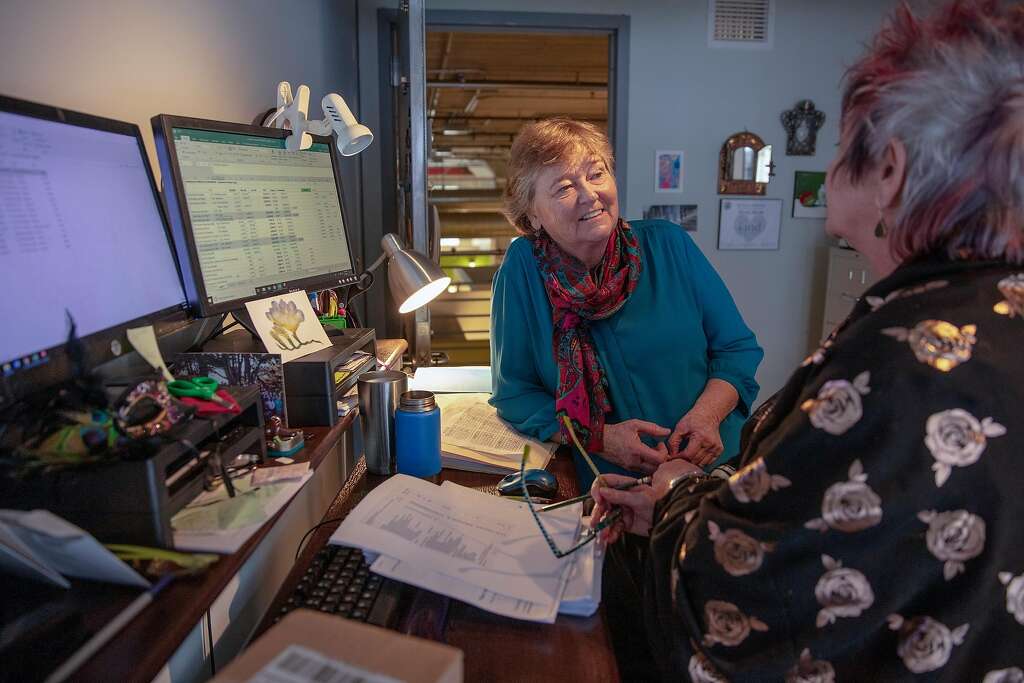
A pot of orchids sits on the judge's wooden dais. A courtroom staffer passes around bowls of candy, snatched up with equal glee by lawyers in dark suits and defendants in soiled clothes.

The judge heaps kindness on the defendants, complimenting one woman on her smile and allowing a man who's not feeling well to return another day. Some who particularly please Superior Court Judge Ron Albers with their progress receive $10 Safeway gift cards. Perhaps it's no wonder, then, that San Francisco's controversial Community Justice Center - the Tenderloin court created to prosecute low-level crimes that blight the neighborhood - has now sprung to life.

It opened in March at a cost of $2.7 million. Few defendants showed up and most cases were dismissed, prompting some city officials to call it a pricey waste of time.

But on a recent afternoon, 115 defendants filled the standing-room-only court, and 76 percent of defendants are now appearing for their assigned court dates. Albers says that in traditional courtrooms, 20 percent of defendants picked up for committing low-level crimes appear in court.

A unique approach

But the Community Justice Center is anything but traditional.

"How are you today?" Albers asked 38-year-old Tenecia Gippson-Kent.

"Great," she answered, beaming.

"I would say you're blessed," Albers said, asking the room to give her a round of applause.

Gippson-Kent was arrested this fall for passing a bad check. She'd been in and out of jail, mostly on drug charges. She said a cocaine addiction led to her losing her four kids and sleeping on the streets.

Since coming to the Community Justice Center, she's been assigned a case manager. She's taking parenting classes, attending substance abuse support groups and seeing a therapist, and she has a bed in a shelter.
Feb 26, 2008

"But for now, the battle goes on."

"What Addicts Need" is the featured cover story of this week's Newsweek, focusing on new developments and insights into the treatment of drug addiction and substance abuse disorders. Scientific developments in treating addiction with a possible "addiction vaccine" make for an interesting read, but it is the subset article titled, "And Now, Back in the Real World," that I found most interesting -- it higlights what communities and public institutions are doing to grapple with the problem of drug addiction and drug-fueled crime in the absence of a medical vaccine or miracle drug.

The article repeats some often discussed statistics; despite the frequency of their use, they still are shocking:
Between 2000 and 2006, the number of drug offenders in federal prison jumped 26 percent, to 93,751. An additional 250,000 are incarcerated in state facilities and thousands more sit in local jail cells.
At an average cost of roughly $25,000 per year to incarcerate an individual, that translates to about $8.6 billion spent each year on incarcerated drug offenders. This figure does not take into account thousands more offenders incarcerated for crimes other than drug offense, but whose addiction fuels their offenses (like stealing to support a drug habit). Most agree that incarceration does not help people overcome their addiction or end the cycle of criminal behavior.

The article describes how the courts are trying to change this pattern by creating programs, like our collaborative courts, that can rehabilitate offenders and reduce recidivism:

The most ambitious program so far is California's Proposition 36, which offers convicted nonviolent drug offenders family counseling and job training in addition to treatment. Since the initiative was approved by voters in 2000, more than 36,000 people have been diverted into treatment every year.
Though there are some successes, the challenges are great. Newsweek does a good job bringing attention to some of the biggest problems, like high drop-out rates and a lack of adequate funding.
Even as attitudes shift, the federal government still budgets far more for stopping drug flow and enforcing drug laws ($8.3 billion this year) than it does for treatment and prevention ($4.6 billion). Treatment programs are un derstaffed. Medications like methadone help some addicts, but harm others. Quitting is a grueling proposition. As a result, less than 10 percent of people who need treatment actually get it. And the proportion of people staying in treatment is "horrendously low," says David Gustafson of the Network for the Improvement of Addiction Treatment. New science may change all that one day. But for now, the battle goes on.

PO on Wheels and Jefferson Awards

Recently, two articles on San Francisco's programs have appeared in the SF Chronicle.
This morning, the Chronicle featured Darren Dill, a specialized probation officer working with homeless probationers in the Tenderloin and SOMA. Officer Dill is an active member of the CJC steering committee, bringing his expertise to the planning board and was a panelist at the CJC Town Hall held in January. An excerpt from the article:
Dill is believed to be the only probation officer-on-wheels working with homeless people in the country, a simple idea for which he recently won the California Probation Officer of the Year Award.

"The simplest approaches are sometimes the best," said Lisa Lightman, who directs special courts for drug offenders and mentally ill people within the Superior Court system. "What he's doing is extraordinarily unique. It really brings supervision up a notch when you can go out and make contact with people where they live."
On Sunday, the Chronicle featured another key person involved with innovative solutions in San Francisco Superior Court - Retired Judge Ina Gyemant - who founded Youth Treatment and Education Court (YTEC), San Francisco's Juvenile Drug & Behavioral Health Court. The program, which began in 1997, has since grown and partnered with the San Francisco Unified School District to offer a specialized high school, the Principal Center Collaborative (known as the PCC), that offers integrated behavioral health services alongside a traditional high-school curriculum. Judge Gyemant was awarded a Jefferson Award for her work in establishing YTEC, and will be featured on KPIX Channel 5 tomorrow on the 6pm nightly news.

Feb 22, 2008

"Seeing Justice Being Done"

Recently, Jack Straw, Lord Chancellor and Secretary of State for Justice of Great Britain, visited the Red Hook Community Justice Center in Brooklyn -- one of the models for San Francisco's own Community Justice Center project. Following his experience, he wrote this op-ed in The Guardian.

Highlight:
"The courts aim to break the cycle of reoffending - and doing so is always the top priority of such courts - by tackling some of the underlying causes of crime such as drug and alcohol addiction, housing, education or debt problems. Sentences aim to include programmes to help solve these problems. . .

I want the public to see their courts as an accessible and vital part of their community. Courts that make a visible difference to the day-to-day lives of everyone who lives there, including offenders."

Feb 20, 2008

Behavioral Health Court on KQED

On Tuesday's KQED "California Report," there was a great feature on BHC. Click here for their website, or listen below:

Tue, February 19, 2008 -- Morning
The California Report
Host: Rachael Myrow


Health Courts
California's jam-packed prisons and high rates of recidivism grab a lot of attention. A lesser-known statistic is the high rate of serious mental illness among inmates. Some experts say it's four times higher among California inmates than the average population. Now, a San Francisco program that offers an alternative to locking up mentally ill offenders is becoming an example for other counties.
Reporters:
• Kelly Wilkinson

Dec 24, 2007

USA Today: Drug Courts Offer Offenders Alternatives

"I had a choice of doing jail time or changing my life and going through treatment," he said. "If you have a choice between doing 2-to-7 or going through the program and going into treatment, any smart person would take the program."

Fuseyamore, 45, and the father of a 10-year-old son, celebrated 10 years of sobriety in June and has been a mechanic for the New York City Fire Department for six years, according to Dennis Reilly, former director of the Brooklyn Treatment Court. Fuseyamore's story is one of thousands touted by supporters of alternative drug courts.

Read the full article from USA Today here, which presents a fantastic examination of the Drug Court movement nationwide.

Also check out Changing the Court, which has featured several of their own success stories alongside this most recent USA Today article.

Dec 7, 2007

Community Justice Center Site - Press Conference

Yesterday, a press conference was held at the proposed site for the Community Justice Center - 575 Polk. See the following news articles for detailed information & photos!

San Francisco Chronicle

SF Examiner

SF Sentinel

San Francisco Public Defender Jeff Adachi, whose office defends low-level offenders, lends support to developing Community Justice Center, seen December 6 with San Francisco Mayor Gavin Newsom and San Francisco District Attorney Kamala HarrisPhotos by Bill Wilson © 2007; SF Sentinel

Nov 26, 2007

Contra Costa Behavioral Health Court

Our neighbors in Contra Costa have recently established their own Behavioral Health Court, and were featured last week in the Contra Costa times.

Until six months ago, Stacy Randolph lived on the streets of Pittsburg and shoplifted random items -- clothing, electronics, alcohol -- to sell for drug money.

The 37-year-old woman did not take medication for her serious
depression. She saw her seven children infrequently when she was not, "druggin', buggin' and stealin'." She was incarcerated in County Jail in Martinez six times in the past three years. . .

Read More

Nov 14, 2007

Behavioral Health Court on the Front Page

This Tuesday, a front page article in the San Francisco Chronicle featured an in-depth article about our Collaborative Justice Programs. The article, "Special Court in S.F. aims to heal rather than punish" focused on Behavioral Health Court, profiling several clients and their treatment center, Citywide Case Management, and also discussed the many issues facing the mentally-ill within the criminal justice system.

"As debate rages over how to solve San Francisco's seemingly intractable homeless problem, city leaders, academic researchers and even some formerly homeless people themselves say progress is being made every Thursday afternoon inside Department 15 at the city's gloomy Hall of Justice. . ." Read More

Sep 2, 2007

Behavioral Health Court

An excellent article on San Francisco's Behavioral Health Court was recently featured in SF Weekly:

". . .Winters was the type of hard-core homeless guy who gave San Francisco politicians heartburn, and made tax-paying citizens feel simultaneously guilty and resentful. He was part of a troubling problem that everyone wishes would go away.

Now, although he still looks like a street-dweller with his long, greasy gray hair and grungy sweatshirts, he's a success story. He gets his shot of medication every two weeks, and lives a stable life under the roof of the Ambassador Hotel. An examination of his case shows exactly what it takes to get one troubled homeless person off the street. It shows that there are solutions to San Francisco's homeless problem — but they're expensive and time-consuming, and it's an open question as to whether citizens are willing to pay the bill. . ."
Read More