Showing posts with label Collaborative Justice. Show all posts

Dec 19, 2017

BBC: Young Adult Court featured on BBC's "Neurolaw and Order" podcast


"This is a courtroom here in downtown San Francisco. A judge presides over a room bustling with young offenders, attorneys, probation officers, and case managers. But this is no ordinary courtroom. This one has been inspired by recent advancements in neuroscience."


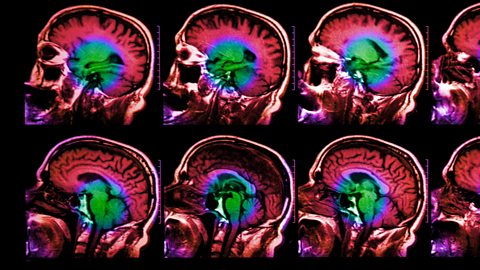
The San Francisco Young Adult Court was featured on the BBC World Service series "The Documentary." In "Neurolaw and Order," Owen Jones, professor of law and biology at Vanderbilt University, explores how brain development heightens risk taking among adolescents and young adults, sometimes leading to criminal activity, as well as ways the criminal justice system is adapting to advancements in neuroscience by offering alternatives to young people facing criminal charges.


Podcast description (BBC): "The latest findings in neuroscience are increasingly affecting the justice system in America. Owen Jones, professor of law and biology at Vanderbilt University, explores where neurolaw is making its mark and where the discipline is heading. One significant finding from MRI scanners is that the adolescent brain continues to develop right into the early- and mid-twenties. The fact that we are not ‘adults’ at age 18 is having big repercussions in the legal system. In San Francisco, the entire way that young offenders of crimes such as armed robbery up to the age of 25 are treated is adapting to the brain data. More and more, neuroscientists are testifying in courts, often to mitigate sentences including the death penalty in juveniles. Other times, they highlight rare brain abnormalities that cause violent and antisocial behaviour, which helps justify a lighter sentence. However, young brains are still malleable. In Wisconsin, brain imaging of juvenile prisoners can detect psychopathic markers. Once identified, staff can employ techniques to de-programme those antisocial traits and rehabilitate prisoners to ready them for, they hope, a crime-free life outside. And this is simply the first generation of neurolaw – where to next?

Click here to listen to "Neurolaw and Order."

May 22, 2017

SF Young Adult Court in the News!

Two recent articles highlighted the importance and impact of the San Francisco Young Adult Court.

The New York Times
"A California Court for Young Adults Calls on Science"
By Tim Requart
April 17, 2017


Photo: Laura Morton / The New York Times

"Surprisingly, this alternative legal philosophy springs not from concerns about overcrowded prisons or overburdened courts, but from neuroscience.

"Researchers have long known that the adolescent brain is continually rewiring itself, making new connections and pruning unnecessary neurons as it matures. Only recently has it become clear that the process stretches well into early adulthood.

"Buried in that research is an uncomfortable legal question: If their brains have not fully matured, how responsible are adults ages 18 to 24 for their crimes?

"Should they be treated more like adolescents, handled in the comparatively lenient juvenile system, or more like hardened 35-year-olds? Should young adults be held fully responsible for certain crimes but not others?"


The San Francisco Chronicle
"Programs in sanctuary cities threatened by federal funding cut"
By Emily Green
March 30, 2017

"In San Francisco, an innovative court program that helps young adults facing criminal charges or who have already been convicted pull their lives together began in 2015 with the help of a Justice Department grant. A team of city employees helps the defendants find jobs, housing and enroll in school. If a defendant meets the goals — about a third graduate — they earn a reduced criminal record or even no record at all."


KQED: "Neuroscientist Explores the Contradictions of the Teen Brain"

Last week on KQED's Forum, Michael Krasny interviewed Dr. Frances Jensen, professor and chair of the department of neurology at the University of Pennsylvania School of Medicine. Dr. Jensen is also the author of "The Teenage Brain: A Neuroscientist's Survival Guide to Raising Adolescents and Young Adults."

Research on adolescent and young adult brain development has been a driving force in the implementation of Juvenile Reentry Court and, more recently, Young Adult Court

Forum description:

"Neuroscientist Frances Jensen says that when her two sons became teenagers, she marveled at their ability to stay focused for a test, yet still commit major lapses in judgment almost daily. The contradictions, she explains, have both emotional and physical roots: teens are more affected by stressful situations than adults, and their brains are years from being fully developed. Jensen joins Forum to talk about her book 'The Teenage Brain: A Neuroscientist’s Survival Guide to Raising Adolescents and Young Adults.'"

May 10, 2017

NADCP: National Strategic Plan for Family Drug Courts Released

The National Association of Drug Court Professionals (NADCP) announced the release of the National Strategic Plan for Family Drug Courts. NADCP's statement is below:

"[NADCP] is pleased to share that the new 'National Strategic Plan for Family Drug Courts' has been released by Children and Family Futures as part of its training and technical assistance agreement with the Office of Juvenile Justice and Delinquency Prevention (OJJDP).

This Strategic Plan provides a framework for a coordinated national strategy to enhance and expand the use of family drug courts to improve the outcomes for children and families affected by parental substance use disorders. The primary goals of the plan are to:

1) Improve the effectiveness of the existing family drug court network by assuring it operates with fidelity to the model;

2) Expand the reach of family drug courts to keep families together and reduce child maltreatment; and

3) Continue to build the evidence base about what works for family drug courts to improve outcomes for children and parents.

Developed with a diverse group of stakeholders, the Strategic Plan is pertinent to all policymakers, practitioners, researchers, foundations, and advocates committed to improving child welfare and substance use disorder treatment outcomes for children and parents.

NADCP CEO Carson Fox notes, 'Of the more than 400,000 children in foster care, the majority are there because of a parent or caregiver who is in need of treatment for alcohol or drugs. This plan lays out a pathway to ensure all children and families have access to effective, evidenced-based services that are proven to improve child welfare outcomes. It advances justice for children and families affected by substance use disorders in a way that the field has never done before.'"

Download the Strategic Plan here.


Mar 7, 2017

Collaborative Courts Speakers Series: Talking About the Complexity of Class and Culture


San Francisco Collaborative Courts offers a quarterly speaker series to provide relevant training opportunities to partners across justice, substance use, mental health, and family service systems. Participation is free.  

Upcoming training opportunity:

Talking About the Complexity of Class and Culture
Friday, April 28, 2:30-4:30PM
Judicial Council of California
455 Golden Gate Avenue, San Francisco, CA
Milton Marks Auditorium, lower level

Overview


Culture supersedes policy, procedures, laws and regulations.  Cultural aspects of poverty are more consistent than cultural aspects associated with gender, race, country of origin, and religion.  Individuals from extreme poverty have their own culture, yet government agencies work from a middle class value set.  Without understanding the hidden rules, values, and goals of those in poverty, treatment providers are likely to struggle with being effective in their efforts to assist.  This lecture will aim to help raise awareness about this controversial but essential topic.


Presenters

Rachyll Dempsey, Psy.D. is a Forensic Neuropsychologist licensed as a Psychologist in 2006 by the Board of Psychology; certified as an Independent Practitioner by the California Sex Offender Management Board (CASOMB) in 2012; and became a Qualified Medical Evaluator certified by the Worker’s Compensation Appeals Board (WCAB) in 2014.  Dr. Dempsey serves as Continuing Education Chair for the California Coalition on Sexual Offending (CCOSO), Bay Area Chapter; Office of Professional Development Committee Member for the California Psychological Association (CPA); and was President of the Northern California Neuropsychology Forum (NCNF) 2015-16. She spent six years as a licensed psychologist working as Assessment Coordinator and supervisor for trainees at San Quentin State Prison and is currently CEO and Founder of Psychological Assessment, Inc., a corporation providing psychological testing and assessment in forensic and non-forensic domains, competency restoration program, sex offender treatment, and corporate services.  Dr. Dempsey has been qualified as a forensic psychologist, neuropsychologist, correctional specialist, sex offender specialist, and developmental specialist in court.


Venus Klinger, Psy.D. completed her doctorate in Clinical Forensic Psychology at Alliant International University. Her interest area is in NGRI (not guilty by reason of insanity), competency, and evaluation. Currently, she is the Director of the Crossroads Competency Restoration program at Psychological Assessment, Inc. Since the Competency Restoration Program began at PAI, she has been providing competency restoration training to adults and juveniles released on their own recognizance or incarcerated in various jails around the bay area.. Dr. Klinger is also adjunct faculty for Alliant International University.

Presentation Goals
  • Participants will be able to identify at least five differences between socioeconomic status (SES).
  • Participants will be able to describe how individuals move from one class to another.
  • Participants will be able to identify how organizations that are run from a middle class paradigm can negatively impact individuals from poverty. 
  • Participants will be able to list three ways (or more) about how to be more successful in working with clients challenged by poverty.

The training is free and CEU credits (MCLE and BBS) will be provided. RSVP is not required. Room is available based on seating capacity. Please forward this information widely.

Oct 11, 2016

Young Adult Court in SF Magazine

San Francisco's newest collaborative court, Young Adult Court (YAC), was featured in San Francisco Magazine last month. Superior Court Judge Bruce Chan presides over YAC.

Judge Bruce Chan, San Francisco Superior Court
As the article describes, YAC is "an attempt to combine emerging neuroscience with social justice, changing the fate of young felons in the process. A growing body of neuroscience research suggests a need to prosecute 18-to-25-year-olds differently than older adults, but Young Adult Court is one of the only alternative courts in the country to provide such an option."

"The idea for San Francisco’s Young Adult Court was first conceived in 2013, when District Attorney George Gascón and then–chief probation officer Wendy Still participated in a criminal justice program at the Harvard Kennedy School. They were inspired by recent research showing that the prefrontal cortex—the part of our brains that manages impulsive decisions, peer pressure, and risk taking—is still rapidly developing until our mid-20s. As a result, the late teenage years and early 20s are the time in life when risky behaviors peak. Rates of unintended pregnancy, binge drinking, and crimes of opportunity are all highest at this age, precisely the time when our legal system says we should know better. While still a relatively recent development in the science world, this matches what most of us already know to be true on a gut level: that 18-to-25-year-olds, while legally adults, don’t always act like them."


Click here to read the full article.

Oct 15, 2015

The Atlantic: "How Treatment Courts Can Reduce Crime"

This article published in The Atlantic last month, "How Treatment Courts Can Reduce Crime," emphasizes the need for treatment courts to expand eligibility criteria do what they do best: "routing people away from prison as opposed to sending people whose criminality is treatable behind bars."

Statistics:

"Research shows that treatment courts significantly reduce crime, and the best treatment courts reduce crime by up to 40 percent. One study showed that this drop lasts up to 14 years. Moreover, these courts diminish drug and alcohol abuse, improve family relationships, raise employment rates and incomes—all positive changes reaching far beyond the rap sheet alone.

"Better yet, they’re a good investment – recent numbers show that for every dollar spent on drug courts, the state saves $2.21 in reduced criminal justice costs. When drug courts take on a bigger challenge, they get a greater reward—a $3.36 return on investment for every dollar invested in treatment for serious, high-risk offenders. The savings—after considering how much money is saved by reduced hospital visits and costs of future victimization—go up to $27 for every $1 invested in treatment court. Looking at it on a per-person basis, every person treated in a drug treatment court saves the state between $3,000 and $13,000 going forward. Some research suggests that 75 percent of drug court graduates never get arrested again.

Sep 3, 2015

MSNBC: "Drug courts get second look"

Last week, MSNBC reported on the growing bipartisan support for drug courts and other "problem-solving" criminal justice alternatives. "With criminal justice reform now an issue for both the Republican and Democratic side of the 2016 presidential campaign, drug courts are increasingly being viewed as a viable alternative to mandatory jail time."

Judge Jo Ann Ferdinand in her courtroom at the Brooklyn Treatment Court, in Brooklyn, N.Y. (Photo by John Trotter for MSNBC)
Judge Jo Ann Ferdinand in her courtroom at the Brooklyn Treatment Court, in Brooklyn, N.Y.
Photo by John Trotter for MSNBC


As reported, President Barack Obama has expressed his support for collaborative courts: "We should invest in alternatives to prison like drug courts and treatment and probation programs which ultimately can save taxpayers thousands of dollars each year.”

The article states that, according to the National Association of Drug Court Professionals, "about 75% of those who complete drug court are not rearrested while as many of 70% of people released from traditional prison do reoffend. Over a million people have gone through drug court since 1989 and an estimated 150,000 people are participating in drug court at any given time. NADCP also estimates that for every dollar invested in drug courts, taxpayers save as much as $3.36 in additional criminal justice costs."

Click here to read the full article. 

Jun 4, 2015

SF Veterans Justice Court featured on PBS Newshour

From Justice for Vets website:

PBS Newshour Brings Viewers Inside San Francisco Veterans Treatment Court


... PBS Newshour [brings] viewers face to face with the staff and participants of the San Francisco Veterans Treatment Court.

The nearly 8 minute segment profiled a Gulf War veteran currently enrolled in the program and presented a comprehensive look at how Veterans Treatment Courts connect veterans with a myriad of services, from in-patient treatment to housing assistance.

“Our goal is to find an outcome which will both prevent recidivism, keep the public safe, keep the victims from being re-victimized, but also deal with the person’s background and the reasons he that he committed the violent conduct that we were just addressing,” said San Francisco Veteran Treatment Court judge Jeffrey Ross. San Francisco District Attorney George Gascon emphasized his strong support for the program, saying “If you’re talking about people that have severe trauma from being on the battlefield and may be self-medicating themselves, these are things that the criminal justice system cannot fix unless we bring other people on board.”

Jun 2, 2015

San Francisco Chronicle: "S.F. program to give ex-cons rooms to improve"

As featured in The Chronicle on May 26, at least 80 people participating in the San Francisco Superior Court's collaborative courts will receive transitional housing through a $600,000 Judicial Council grant. By helping offenders with mental illness and substance use disorders secure housing, the Court is working with its justice and community partners to keep individuals out of the criminal justice system and to increase public safety in San Francisco.
By Heather Knight
As Megan Filly, Deputy Press Secretary, Superior Court of California, looks on, Krista Gaeta, Deputy Director or Tenderloin Housing Clinic, enters a room at Drake Hotel in San Francisco, Calif., on Monday, May 18, 2015. Photo: Scott Strazzante, The Chronicle

As Megan Filly, Deputy Press Secretary, Superior Court of California, looks on, Krista Gaeta, Deputy Director or Tenderloin Housing Clinic, enters a room at Drake Hotel in San Francisco, Calif., on Monday, May 18, 2015.  
(Photo: Scott Strazzante, The Chronicle)

Several dozen good-sized studio apartments with new kitchenettes, furnishings and flat-screen televisions will soon be available in the heart of San Francisco — and in today’s frothing real estate market, they could probably fetch $1,500 a month or more.

But these apartments in a spruced-up single-room-occupancy hotel in the Tenderloin neighborhood will not be part of the rental listings on Craigslist. Instead, they’re reserved for a perhaps surprising population: people who have committed crimes.

The apartments are part of a pioneering move by San Francisco’s Superior Court and Adult Probation Department to help people convicted of crimes find success outside the criminal court system rather than cycle in and out of jail.

Both agencies are partnering with the Tenderloin Housing Clinic, which manages more than 1,600 supportive housing units in the city, to provide free, temporary housing to people who have been convicted of low-level crimes and people on probation for more serious crimes with the goal of finding them permanent places to live within a year. Case managers will also be teamed with the residents to help them address alcohol or drug addictions or other issues that may have contributed to their criminal activity.

“This is a program we’re very excited about because it’s serving the needs of people in our programs and people in our community,” said Superior Court Presiding Judge John Stewart.

Click here to read the full article.


Nov 18, 2014

WSJ Online: "A Surprising Portrait of the Misdemeanor Criminal"

As Proposition 47, the Reduced Penalties for Some Crimes Initiative (2014), is implemented in California, this opinion (recently published in the Wall Street Journal) sheds light on the needs of misdemeanor offenders and opportunities to divert individuals away from the criminal justice system, and into social services, through court interventions.

The author, Greg Berman, is the director of the Center for Court Innovation, a nonprofit organization that conducts research and operates model projects such as the Red Hook Community Justice Center.


A Surprising Portrait of the Misdemeanor Criminal
By Greg Berman

The John Jay College of Criminal Justice released a report at the end of October documenting the rise of misdemeanor arrests in New York City since the 1980s. The timing of the report was fortuitous. The city’s policy makers, academics and advocacy groups are in the midst of a spirited debate over the merits of broken-windows policing—a philosophy that suggests police can help prevent crime by addressing low-level disorder.

To proponents, broken windows is not just the linchpin of New York’s miraculous public-safety improvements over the past generation. It is one of the foundations of civilized society: If we do not care for the physical appearance of our city or attempt to promote civil behavior among its inhabitants, we court chaos.

Critics of broken windows point to the collateral damage that accompanies low-level law enforcement—citing thousands of New Yorkers exposed to criminal convictions, potential incarceration and negative long-term consequences like exclusion from public housing and diminished job prospects.

Opponents of broken windows tend to focus on one segment of the misdemeanor population. A recent piece by Michael Greenberg in the Nov. 6 New York Review of Books is typical. Highlighting a 17-year-old student apprehended for possessing the remnants of a joint, Mr. Greenberg writes: “By an overwhelming majority, New Yorkers who are arrested for low-level infractions . . . are young black and Hispanic men in poor neighborhoods. Often these arrests have been for possessing tiny amounts of marijuana . . . police saddle thousands of young men with criminal records for an offense that the state has largely decriminalized and that white people regularly commit with impunity.”

There are thousands of people who fit this description. The John Jay College report highlights that the rate of misdemeanor arrests for black men between the ages of 18 and 20 in New York City almost tripled between 1990 and 2013—rising to more than 20,000 arrests per 100,000 people from fewer than 8,000 per 100,000.

But this is an incomplete portrait of the misdemeanor population. The John Jay study documents that half of the misdemeanor arrests in New York City are a direct response to complaints or involve more serious misdemeanor offenses such as domestic violence, theft or weapons possession.

In an effort to better understand all this, the Center for Court Innovation is conducting a study that has involved interviewing nearly 1,000 people charged with misdemeanors in Manhattan, Brooklyn and the Bronx. The first thing to note is that most of them are not teens—the average age is 35. They are also not newcomers to the criminal justice system—more than half have prior misdemeanor convictions and more than a third have prior felony convictions.

There’s a saying that misdemeanors aren’t complicated legal cases, but they are committed by people with complicated lives. The data underline this truth. This is a population with serious problems and multiple needs. More than half of our sample reported being unemployed, and nearly one in two said they use drugs daily. Mental health issues abound. The prevalence of trauma was staggering. More than half of the sample reported having witnessed a shooting or other violent event. One in four reported having experienced physical, emotional or sexual abuse. Nearly 20% said they had attempted suicide.

The emerging research suggests several new directions for the criminal-justice system. First, there are opportunities to divert out of the system thousands of New Yorkers who have been apprehended for quality-of-life offenses such as marijuana possession or transportation-fare avoidance. These opportunities should be seized—either by not making formal arrests or by increasing the use of pretrial diversion programs for young people and those who have committed a single infraction or two. When interacting with these and other populations on the streets, the police should take pains to explain their decisions clearly and to treat individuals with dignity and respect; research suggests this will promote law-abiding behavior in the long run.

But the research tells us that many people accused of misdemeanors come to the justice system with more serious issues than occasional marijuana use. Yet there are opportunities for reform here, too. Instead of using jail as a default, courts can be much more aggressive in linking misdemeanor offenders to drug treatment, job training and mental-health counseling, for instance, addressing the kinds of problems that lead to more criminal behavior.

There is already solid evidence that this can make a difference. The Red Hook Community Justice Center was created in 2000 to expand the use of alternatives to incarceration for misdemeanor offenders in southwest Brooklyn. Each year the center links thousands of defendants to social services and community restitution projects in lieu of jail. An independent evaluation in 2013 by the National Center for State Courts documented that the project reduced the number of defendants receiving jail sentences by 35%. Over a two-year study period, adult defendants handled at the Justice Center were 10% less likely to commit new crimes than offenders who were processed in a traditional courthouse. Juvenile defendants were 20% less likely to re-offend.

The reductions in felony crimes over the last 30 years have been hailed around the world as “the New York miracle,” and credited with reducing fear and improving economic development. Today we are experiencing an ancillary benefit: The decline of felonies has created breathing room to give misdemeanors and the people who commit them the focus they deserve.

Oct 16, 2014

CJC selected as one of four Mentor Courts nationwide

Last month, the Center for Court Innovation, in partnership with the U.S. Department of Justice’s Bureau of Justice Assistance, selected the San Francisco Community Justice Center as one of four sites to serve as mentor courts for other jurisdictions seeking to promote implement alternatives to incarceration. Other sites include: Dallas, Texas; Hartford, Conn.; and Orange County, Calif.


"The mentor courts will encourage courts around the country to rethink the standard approach to low-level crime, emphasizing alternatives to incarceration where appropriate and engaging local residents in doing justice," said Kim Ball, senior policy advisor at BJA.

Click this link to read the full announcement:
http://www.courtinnovation.org/mentor-community-courts

Congratulations to the CJC staff for receiving this important recognition of their dedication and hard work!

Mar 11, 2014

SF Commissioner spearheads collaborative justice on Yurok tribal land

Tribal judge works for Yurok-style justice
By Lee Romney
Los Angeles Times (March 5, 2014)

"Abinanti in 1974 became the first Native American woman admitted to the State Bar of California. A longtime San Francisco Superior Court commissioner, she tried to retire in 2011 but was recently asked to return every other week, in addition to her work on the tribal court." (Photography by Francine Orr)

Klamath, Calif. -- Abby Abinanti squints at her docket. "The court is going to call — the court is going to put on its glasses," she says dryly, reaching to grab her readers and snatch some candy from a staff member.

As chief judge of the Yurok Tribal Court, Abinanti wears no robe. On this day, she's in jeans and cowboy boots, her silver hair spilling down the back of a black down vest. In contrast to her longtime role as a San Francisco Superior Court commissioner, she doesn't perch above those who come before her; she shares a table with them.

"Hi, big guy. How are you doing?" she softly prods a 29-year-old participant in her wellness court, which offers a healing path for nonviolent offenders struggling with substance abuse.

Abinanti has watched Troy Fletcher Jr. battle bipolar disorder and methamphetamine addiction, land in jail and embrace recovery under the tribe's guidance. She's known his grandmother since before he was born.

Though that would be cause for recusal in the state system, here it's pretty much the point. Her most common question for court newcomers: "Who's your mom?"

"Here we have a village society," Abinanti says of California's largest tribe, "and the people who help you to resolve your problems are the people you know."

Native American jurisprudence has evolved since tribes began to regain their sovereignty, returning to traditional values of respect, community support and responsibility, and collective healing — for victims, perpetrators and the circle of lives they touch.

Abinanti, who in 1974 became the first Native American woman admitted to the State Bar of California, has been at the forefront.


Related article:
Yurok Chief Judge Abby Abinanti and the wooden acorns she awards to successful participants in the tribe's wellness court.
"Yurok Chief Judge Abby Abinanti at her desk in Klamath, Calif. The handmade wooden acorns are given out individuals who successfully complete the tribe's wellness court program." (Francine Orr / Los Angeles Times / November 20, 2013)